Journal · Art de vivre
Why live on Île de Ré: bicycles, salt and rest
Living on Île de Ré: ten white villages, a hundred kilometres of cycle paths, salt marshes and Vauban ramparts. Seven reasons to choose the island of light.
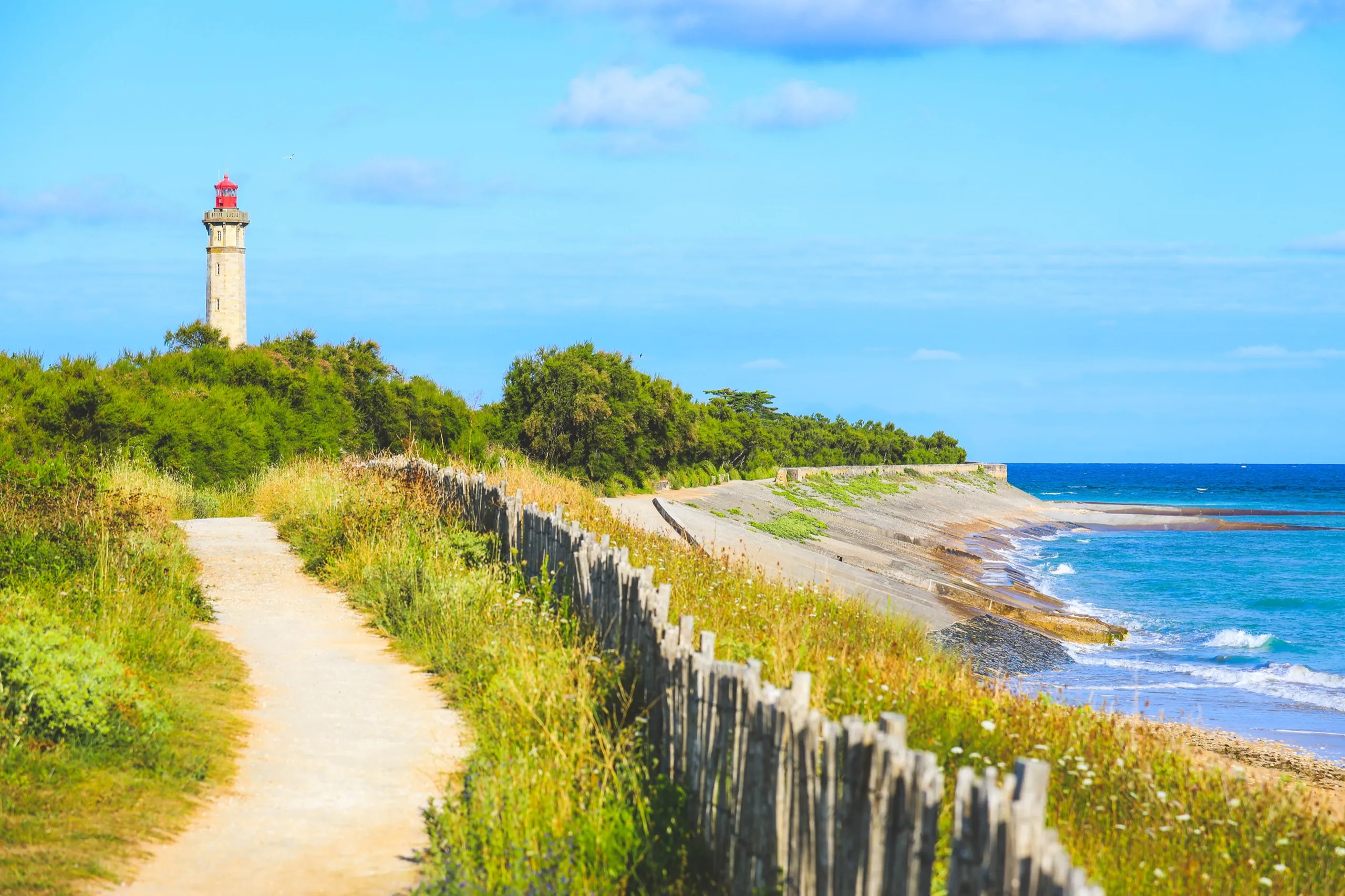
Île de Ré is crossed by bicycle, flat as an open hand, between low vineyards, salt marshes and white houses with sage-green shutters. Those who have chosen to live there each say it their own way: the island is not visited, it is inhabited, to the rhythm of tides and the morning market.
Why live on Île de Ré, then? For what it forbids as much as for what it offers: no fast road, no new construction, no hurry. Here are seven reasons that explain the loyalty of the families who anchor there, often generation after generation.
Ten villages, ten characters
Ré is not one commune, it is a confederation: Saint-Martin and its Vauban ramparts, Ars and its black-and-white steeple, La Flotte and its medieval port, Les Portes and its dunes, Loix between marsh and vines. Each village has its square, its market, its character.
This mosaic lets you choose your Ré: commercial in Saint-Martin, maritime in La Flotte, wild in Les Portes, rural in Loix. And change atmosphere by bike in twenty minutes.
Cycling as a way of life
With over a hundred kilometres of protected paths, the island is one of the rare French territories where the car becomes superfluous. Children cycle to school, baguettes come back on the handlebars, dinners are joined through the vines.
This gentle traffic changes the quality of the days: no road noise, encounters at every turn of the pedal, an island that rides like a park.
Protected heritage, all the way to the horizon
The ramparts of Saint-Martin-de-Ré, Vauban’s work, are listed as world heritage: the complete star of fortifications still reads in the plan of the town. The Whale lighthouse, the steeples and the carriage gates complete this regulated setting.
Above all, island planning is of a severity that protects: heights, colours, materials, everything is framed. What you buy on Ré is a landscape guaranteed for decades.
The marshes, the salt and the flavours
The salt marshes of Loix and Ars produce a reputed salt, harvested by sauniers you meet in the hot hours. Vineyards, asparagus and new potatoes complete a local table that is no marketing argument.
Living on Ré means shopping at the Saint-Martin or Ars market, knowing your salt producer, your mussels and your Bois-Plage wine grower.
The light that brought the painters
The Ré light, famed since the nineteenth century, comes from the meeting of ocean, marsh and sky: frank in the morning, silver at high tide, golden in the evening over the vines. Painters followed it, from Guillaumin to Chagall on holiday.
This light sets the price of evenings: sunsets in Les Portes or La Couarde are a ritual you never tire of sharing.
La Rochelle and the mainland twenty minutes away
The bridge links Rivedoux to La Rochelle in twenty minutes: hospital, direct TGV to Paris, flights to London and Ireland. The island is cut off when you want, connected when you must.
This continent-island switch is the key to peaceful ownership: you live on Ré, you heal and travel from La Rochelle. Our stories on La Rochelle detail the other side of the bridge.
What does each profile come to find on the island?
Île de Ré does not address a single public. Here, in short, is what each comes to find:
| Profile | What Ré brings | The point of caution |
|---|---|---|
| Parisian family | Beaches, cycling, the safety of a no-through territory | The short season and the July and August crowds |
| International retiree | Light, calm off season, the airport via La Rochelle | The upkeep of a house closed for months |
| Heritage investor | A scarcity of supply protected by planning rules | Rental yields capped by regulation |
| Nature lover | Marshes, dunes, the Lilleau des Niges reserve | Heavy footfall on the paths in summer |
Our other Art of living stories extend the stroll, coast after coast.
Can you own on Ré without being there every week?
The Ré house still demands its upkeep: sea air, roofs, shutters to paint, tradespeople booked months ahead, a garden growing with every rain. Our Owning remotely series details these gestures one by one, from winter airing to roofer checks. The page all our services on Île de Ré gathers what we organise there, and our stories on La Rochelle and Arcachon complete the tour of the Atlantic coast.
This is precisely where a dedicated concierge steps in. At French Realty, upkeep is handled quoted individually, by the time actually spent, so that you keep the best of the island and we take the rest. To each their share: to you the bike, the salt and the sunsets, to us the logistics.
Frequently asked questions
Do you need a car to live on Île de Ré?
On the island itself, the bike is the real vehicle: over a hundred kilometres of protected paths link the ten villages, the beaches and the marshes. The car remains useful for the mainland, La Rochelle and bulk shopping, especially as the bridge is tolled and saturates in summer. Many owners leave it parked for days.
Is Île de Ré alive out of season?
Yes, in its own way: roughly three thousand permanent residents keep shops, schools and markets alive year round, especially in Saint-Martin, La Flotte and Ars. Winter is calm and bright, prized by owners who come to breathe between seasons. In summer the island hosts ten times the population, with familiar codes: everything is booked early.
Can the upkeep of a house on the island be delegated from abroad?
Yes, and it is essential: trades in high demand, sea air, long closures. Your dedicated contact coordinates gardener, electrician and roofer, follows mail, airs and shows the house, on a time-spent basis. You stay in charge from your country of residence and come back to a sound, ready home.