Journal · Art de vivre
Why live in Antibes: seven reasons to put down roots between the Cap and Juan
Living in Antibes: ramparts, Port Vauban, sandy beaches and Sophia Antipolis next door. Seven lasting reasons to choose this town between Nice and Cannes.
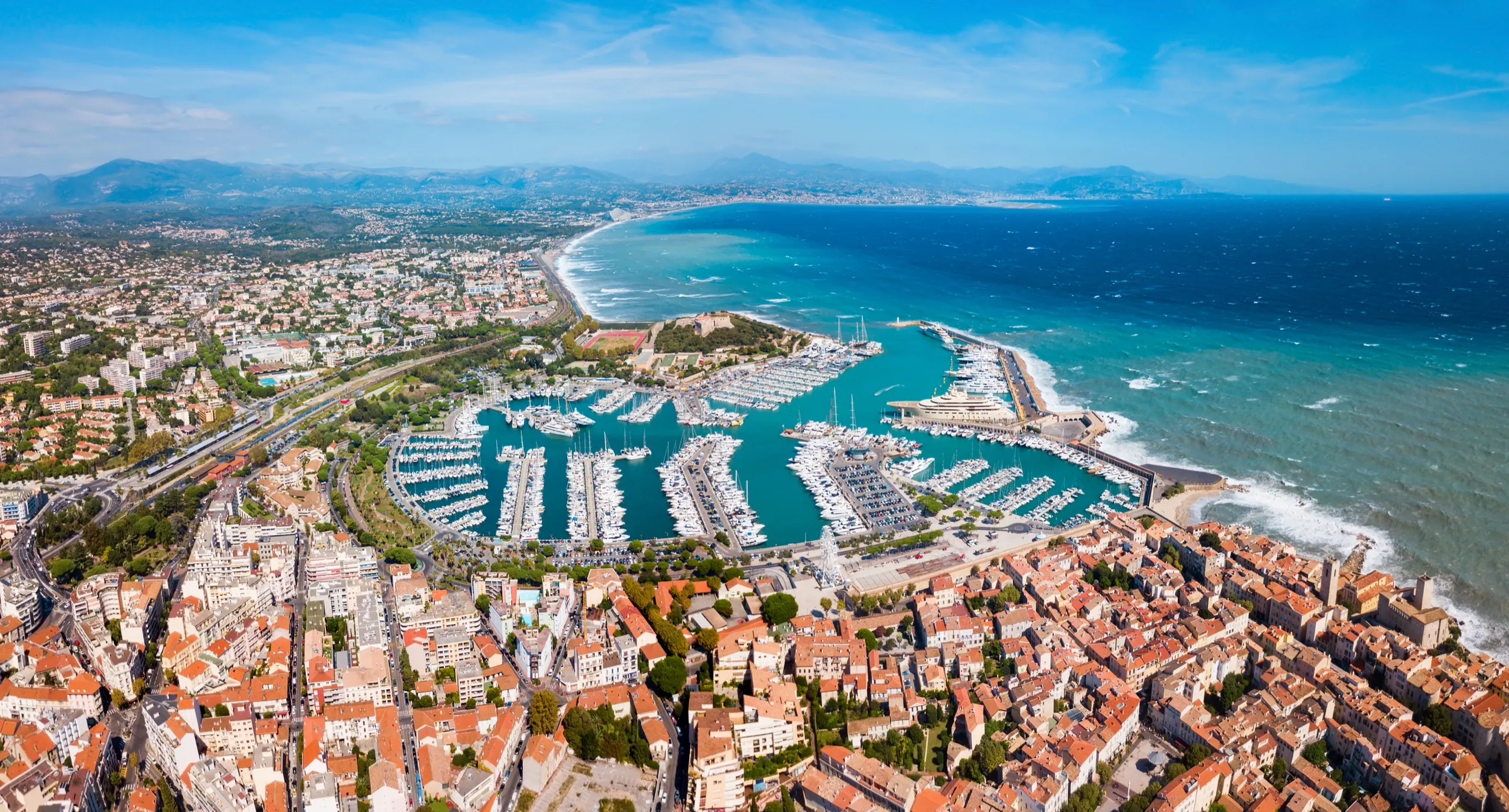
Antibes announces itself through its seafront ramparts and the mast ballet of Port Vauban. Those who have chosen to live in Antibes know the town is more than that postcard: it lives in a market smelling of fennel and tomatoes, in a sandy beach within walking distance when neighbouring towns offer only pebbles, in a local life that continues in February once the parasols are stored away.
Why live in Antibes, then? For the rare combination of an ancient, lively, walkable town set between two of the most active poles of the French Riviera. Here are seven reasons why people stay, long after the first summer.
Old Antibes, a town within the town
Behind its Vauban ramparts, Old Antibes lines up pedestrian lanes, colourful facades and shaded squares. Everything is done on foot: the cours Masséna market in the morning, the fish, the greengrocer who recognises you, the children’s school ten minutes from the port.
This old density has become rare on the coast. It gives daily life the gentleness of a Mediterranean borough, with the services of a real town just behind the walls.
Sandy beaches, on foot
On a shore dominated by pebbles, Antibes kept its sand. The Gravette and Ponteil beaches slope gently, five minutes from the centre: you swim there in the morning before work, you take the children there in the evening as the heat fades.
The Cap d’Antibes adds coves and the Tire-Poil path, that wild coast winding between pines and rocks up to the Garoupe. Living in Antibes means having the sea in several forms, depending on the mood of the day.
A port alive all year
Port Vauban is Europe’s largest marina, and above all a neighbourhood in its own right. You cross crews, marine tradespeople, families on their evening walk. The view of the ramparts from the quai des chartreux is worth every belvedere.
The port also structures the local economy, with yachting, related services and activity that does not stop with the season. For an owner, it is the guarantee of a town inhabited twelve months a year.
Sophia Antipolis, the working town next door
Fifteen minutes from the ramparts, Sophia Antipolis concentrates technology, research and headquarters, with their share of international executives. This closeness changes the nature of demand: it is not only tourist, it is residential and permanent.
Concretely, it means tenants all year, international schools nearby, and a community used to foreign files. A town that lives year round holds its value, and keeps it well.
The light of the Cap and the pine groves
The Cap d’Antibes keeps its umbrella pines, hidden villas and century-old gardens. The lighthouse walk, the Garoupe chapel and the shaded avenues of the boulevard Kennedy compose a setting that inspired generations of painters and writers.
That frank light, softened by the sea and the pines, makes the facades of the old centre vibrate at daybreak. You stop noticing it, then it grips you again with every return from travel.
Two stations, one airport: the town of connections
Nice airport is twenty minutes away, with its links to the capitals and long-haul routes. The station puts Cannes ten minutes away, Monaco forty-five, Ventimiglia and Italy an hour. The coastal regional train works as a metro between the towns of the bay.
For an international owner, this ease of access changes the use of the property: you come for a weekend, not only for holidays. The house stays alive because it stays close.
What does each profile come to find in Antibes?
Antibes does not address a single public. Here, in short, is what each comes to find:
| Profile | What Antibes brings | The point of caution |
|---|---|---|
| Sophia international executive | A liveable coastal town twenty minutes from the technology park, beaches included | Traffic on the avenue Robert Soleau at rush hour |
| Retiree living abroad | Sand, the market, the hospital, the airport twenty minutes away | The July and August crowds around the port and beaches |
| Family | Schools, supervised beaches, station and water sports | Parking in the old town, scarce and sought after |
| Rental investor | Year-round demand sustained by Sophia and yachting | Short-term letting is regulated by the town |
Our other Art of living stories extend the stroll, town after town.
Can you enjoy Antibes without its upkeep?
Loving Antibes and looking after a property there remain two different things. Mail, tradespeople, deliveries, closing a pied-à-terre between stays, the wear of salt on facades: so many gestures that eat the time you would rather spend simply living the town. Our Owning remotely series details each of them, from mail to seasonal closing. The page all our services in Antibes sets the landmarks for those considering settling for good, and our stories on Nice and Cannes complete the tour of the bay.
This is precisely where a dedicated concierge steps in. At French Realty, upkeep is handled quoted individually, by the time actually spent, so that you keep the best of Antibes and we take the rest. To each their share: to you the ramparts, the sand and the market, to us the logistics.
Frequently asked questions
Do you need a car to live in Antibes?
Old Antibes, the Provençal market and the first beaches are covered on foot, and the station links Nice in 15 minutes and Cannes in 10. A car remains useful for the Cap d'Antibes, Sophia Antipolis and the Grasse hinterland. Many non-resident owners keep one there for their stays.
Is Antibes a year-round town or just a summer one?
Antibes has nearly 75,000 residents and lives year round: daily market, schools, hospital, winter shops. Sophia Antipolis and Port Vauban sustain their own economic activity, independent of the tourist season. Summer brings crowds and festivals, without emptying the town in September.
Can the upkeep of a property in Antibes be delegated from abroad?
Yes. Your dedicated contact organises the follow-up on a time-spent basis: opening and closing the home, mail, coordination of partner tradespeople for the wear of salt and damp, preparation of your arrivals. You stay in charge from your country of residence and come back to a home that is ready.