Journal · Art de vivre
Why live in Saint-Jean-de-Luz: the bay that shelters
Living in Saint-Jean-de-Luz: the only sheltered bay of the Basque coast, a working fishing port, Spain twenty minutes away. Seven reasons to choose Luzian gentleness.
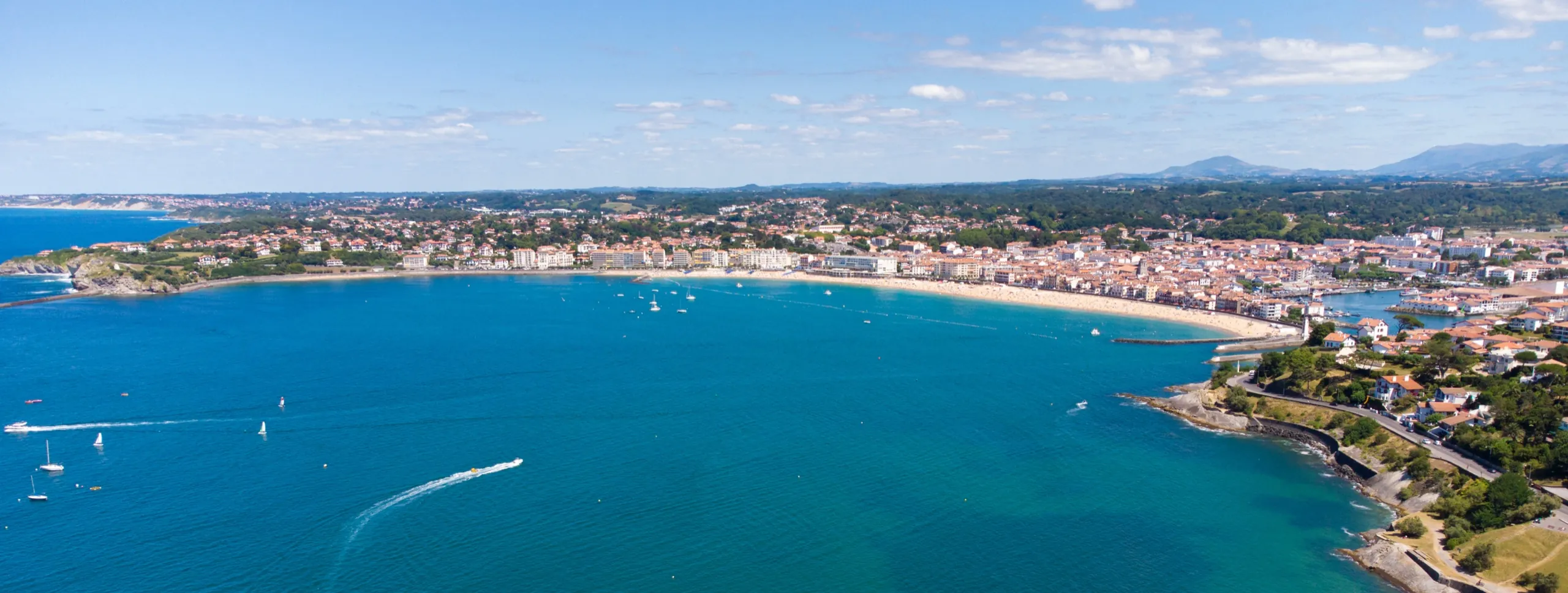
Saint-Jean-de-Luz enters through its bay: the ocean suddenly turns gentle, breakwaters edge a sandy beach where children splash safely, and Basque houses line up their red and green shutters facing the port. Those who have chosen to live there know it: the town has kept the soul of a fishing borough that grew old without losing its manners.
Why live in Saint-Jean-de-Luz, then? For this sheltering bay, for a table that follows the fish auction, for Spain close by and the hills behind. Here are seven reasons why people stay, for summer first, then for the whole year.
The only sheltered bay of the Basque coast
From Hendaye to Bidart, the Basque coast faces the ocean open; Saint-Jean-de-Luz is the exception, with its bay closed by breakwaters and its calm waters. You swim there as in a tidal pool, learn sailing there, walk there in the evening from one breakwater to the other.
This geography changes everything for families as for careful swimmers: the sea is a daily use, not a performance.
A port that still works
The morning auction, the yellow and blue trawlers, the cutters coming up the Ciboure: the Luzian port is not scenery, it employs and it feeds. The catch of the day lands in the quayside restaurants and the covered market.
This real activity keeps the town alive year round, far from the resorts that close in October. It also gives its identity to the local table, from txangurro to grilled sardines.
Royal history and Basque houses
It was here that Louis XIV married Marie-Thérèse of Austria in 1660, in the Saint-Jean-Baptiste church whose façade still watches the port. The Maison de l’Infante and the seafront mansions recall that great chapter.
Basque houses, white stone, half-timbering and coloured shutters, draw a coherent, protected old centre. Ciboure, the sister commune of Ravel’s birth, extends the setting around Socoa and its fort.
The hills behind, Spain beside
La Rhune and the first Basque summits draw the southern horizon; Spain begins fifteen minutes away, Hendaye then San Sebastián fifty. Shopping, pintxos and the Spanish airport become options of daily life.
This double border, hills and Spain, makes weekends rich: paths, the Chantaco or Nivelle golf, Spanish beaches, San Sebastián festivals. Living in Saint-Jean-de-Luz means inhabiting two countries in one.
A town that stays itself in season
The Luzian summer is family-minded: beaches fill without excess, Basque festivals and brass bands animate the evenings, the Grande Plage lives to the rhythm of children. The town welcomes the world without turning into a stage.
September gives the town back to the Luzians: terraces stay open, the market stays complete, the late-season light gilds the facades. It is the owners’ favourite moment.
The table, the sea and the markets
The covered market, the producers of the Basque hinterland, sheep cheese, Basque cake and the town’s chocolate compose a table that needs no guides. The port restaurants serve what the auction decided.
This everyday gourmet streak is an art of living in itself: you lunch late, dine outside six months a year, host without stress because the produce speaks.
What does each profile come to find in Saint-Jean-de-Luz?
Saint-Jean-de-Luz does not address a single public. Here, in short, is what each comes to find:
| Profile | What Saint-Jean-de-Luz brings | The point of caution |
|---|---|---|
| Family | The sheltered bay, schools, water sports without danger | The July and August crowds on the Grande Plage |
| International retiree | The mild climate, Biarritz airport, Spain nearby | The upkeep of protected facades in the old centre |
| Weekend Parisian | The TGV into town itself, the pedestrian centre, the table | Old-centre prices rising every year |
| Rental investor | A loyal family demand, summer and long weekends | Short-term letting regulation in the centre |
Our other Art of living stories extend the stroll, coast after coast.
Can you enjoy the bay without its upkeep?
Loving Saint-Jean-de-Luz and looking after a Basque house remain two different things. Shutters to repaint, sea air, mail, much-demanded tradespeople, closing between stays: so many gestures that want a presence. Our Owning remotely series details each of them, from facade checks to preparing returns. The page all our services in Saint-Jean-de-Luz gathers what we organise there, and our stories on Biarritz complete the tour of the Basque coast.
This is precisely where a dedicated concierge steps in. At French Realty, upkeep is handled quoted individually, by the time actually spent, so that you keep the best of the bay and we take the rest. To each their share: to you the bay, the auction and the pintxos, to us the logistics.
Frequently asked questions
Do you need a car to live in Saint-Jean-de-Luz?
The centre, the port and the Grande Plage are covered entirely on foot, and the station links Biarritz, Hendaye and Spain in about fifteen minutes. A car remains useful for the Basque hills, golf courses and the Acotz coves. Many owners live year round without depending on a car daily.
Is Saint-Jean-de-Luz different from Biarritz?
Yes, and that is the point: where Biarritz shows off its villas and surf spots, Saint-Jean-de-Luz keeps the soul of a maritime borough, sheltered bay, fish auction and Basque houses. Prices stay gentler, the mood more family-like. The two towns are fifteen minutes apart, airport included.
Can the upkeep of a property in Saint-Jean-de-Luz be delegated from abroad?
Yes. Your dedicated contact organises the follow-up on a time-spent basis: opening and closing the house, mail, coordination of trades for sea air and protected façades, preparation of your arrivals. You stay in charge from your country of residence and come back to a home that is ready.