Journal · Art de vivre
Why live in Vannes: the walled town and the small sea
Living in Vannes: ramparts, half-timbered houses, the Gulf of Morbihan and a direct TGV to Paris. Seven reasons to choose the gateway to Brittany's most beautiful bay.
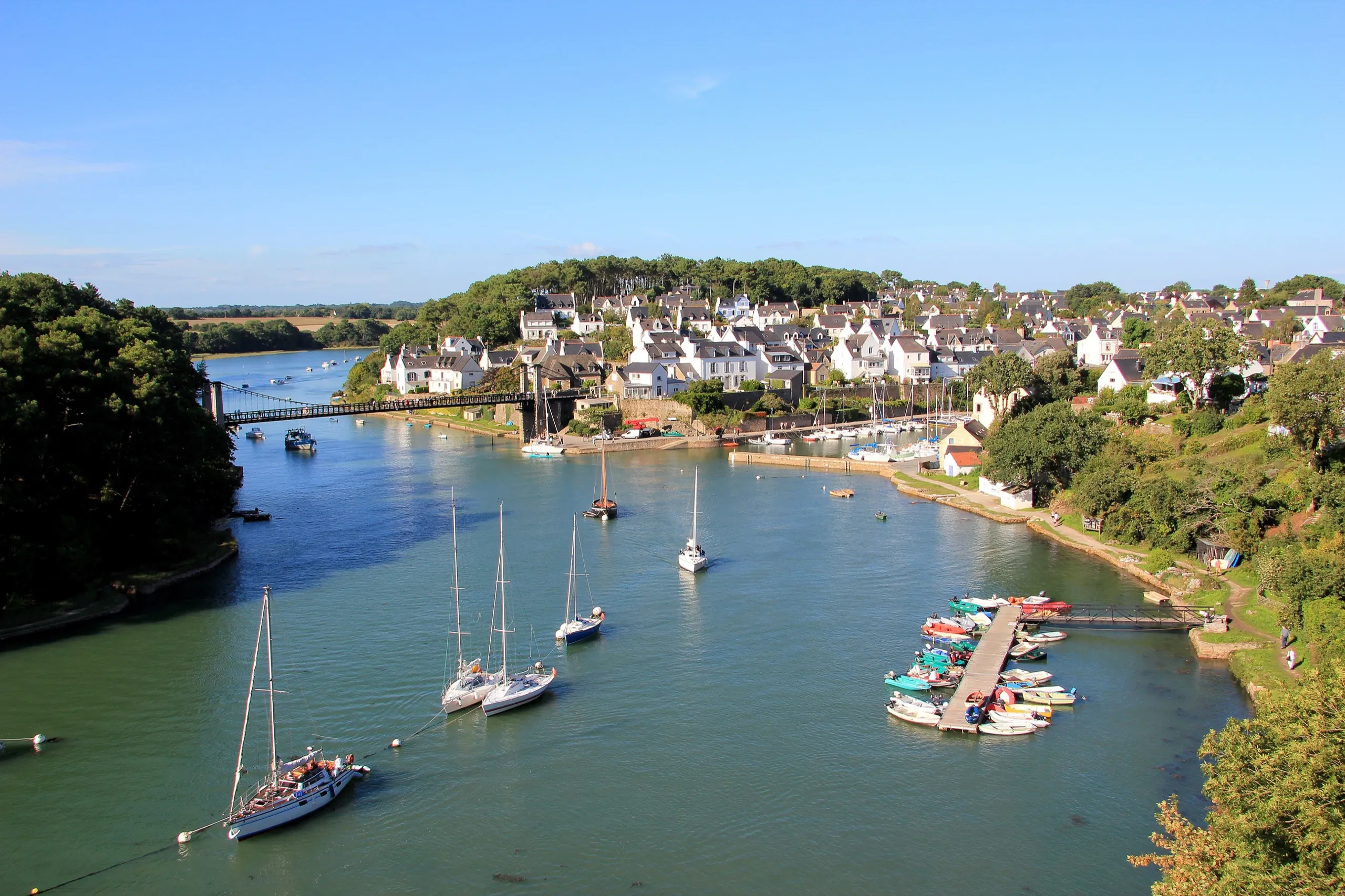
Vannes is discovered through the Porte Saint-Vincent: the ramparts, the masts of the harbour, and behind, the place des Lices with its charmingly leaning half-timbered houses. Those who have chosen to live in Vannes say it with a smile: the town has the dignity of a capital and the size of a borough, with behind it a small sea strewn with islands.
Why live in Vannes, then? For this alliance of a complete medieval centre and a gulf that sailors count among Europe’s most beautiful waters. Here are seven reasons why people settle, from the Parisian weekend to the definitive move.
The walled town, a medieval gem
Behind its ramparts, Vannes lines up half-timbered houses, private mansions and cobbled lanes around Saint-Pierre cathedral and the place des Lices. The washhouses of the Garenne gardens slope to the river, and old Vannes is covered entirely on foot.
This urban quality is rare in Brittany and in France: a walled town that is inhabited, commercial, alive in the evening as on Sunday morning at the market.
The Gulf of Morbihan, the small sea
The gulf opens south of the town: an inland sea of two hundred square kilometres, scattered with islands and islets, recomposed by the currents at every tide. You sail it, kayak it or walk it along the coastal paths of Arradon and Baden.
Living in Vannes means having this family navigation at the door: anchorages, shore fishing, auctions and sheltered harbours, without the constraints of the open sea.
A mild climate for the latitude
The gulf enjoys a remarkable microclimate: frosts are rare, winters short, gardens early. Camellias, mimosas and fig trees thrive on the shores when northern Brittany freezes.
This mildness lengthens the outdoor season: harbour terraces stay open much of the year, and the gulf paths are walked in February as in July.
The direct TGV, the connected town
Vannes is about three hours from Paris-Montparnasse by TGV, the station a ten-minute walk from the ramparts. The airports of Lorient, Rennes and Nantes frame the town within an hour and a quarter.
This connection is the Parisians’ argument: you come for the weekend without counting, the town staying more reachable than the Riviera or the Bassin. The house stays alive because it stays close.
A complete town, all year
A sub-prefecture and university town, Vannes keeps hospital, schools, cinema, theatre and festivals twelve months a year. The marina, the aquarium and the Cohue museum animate cultural stays.
This completeness is precious for a non-resident owner: the town works in February, trades are many, and local upkeep has long been established for a Breton and international clientele.
The islands, the oysters and the paths
The Rhuys peninsula closes the gulf to the south, with the Suscinio castle and its moors; the islands of Arz and aux Moines are reached by ferry from the harbour. Gulf oysters, ciders and galettes complete a full Breton table.
Coastal paths link it all on foot: Conleau, Arradon, Baden, the island of Arz for a tide’s time. Sunday plans follow wind and tide, not traffic.
What does each profile come to find in Vannes?
Vannes does not address a single public. Here, in short, is what each comes to find:
| Profile | What Vannes brings | The point of caution |
|---|---|---|
| Weekend Parisian | The direct TGV, the walled town, the gulf by bike | Intra-muros prices, record highs for Brittany |
| International retiree | The mild climate, the hospital, the changing light | Frequent rain and the upkeep that goes with it |
| Family | Schools, the university, sea sports | The distance of some specialised services |
| Sailor | A unique body of water, harbours and anchorages | The upkeep of a boat in addition to the house |
Our other Art of living stories extend the stroll, coast after coast.
Can you enjoy the gulf without its upkeep?
Living in Vannes and looking after a Breton house remain two trades. Rain, roofs, shutters, mail, closing a home between stays: so many gestures that call for a local presence. Our Owning remotely series details each of them, from ventilation to preparing returns. The page all our services in Vannes gathers what we organise there, and our stories on La Rochelle continue the tour of the western ports.
This is precisely where a dedicated concierge steps in. At French Realty, upkeep is handled quoted individually, by the time actually spent, so that you keep the best of the walled town and we take the rest. To each their share: to you the ramparts, the gulf and the tides, to us the logistics.
Frequently asked questions
Do you need a car to live in Vannes?
The walled town, the port and the shops are covered on foot, and the bike leads to the gulf along the seafront paths. A car remains useful for the Rhuys peninsula, the islands and the nearby auctions. Summer shuttles also run up to the gulf from the centre.
Is the Vannes climate really milder than northern Brittany's?
Yes, the Gulf of Morbihan enjoys a remarkably mild microclimate for the latitude: short winters, rare frosts on the shore, summers tempered by the small sea. The gulf's gardens shelter camellias and mimosas the northern Brittany never sees. Rain exists, but the light changes constantly.
Can the upkeep of a property in Vannes be delegated from abroad?
Yes. Your dedicated contact organises the follow-up on a time-spent basis: opening and closing the home, mail, coordination of trades for frequent rain and sea air, preparation of your arrivals. You stay in charge from your country of residence and come back to an aired, ready home.